33 Years ago a urban legend and a actual event and book sparked a movie and some sequels
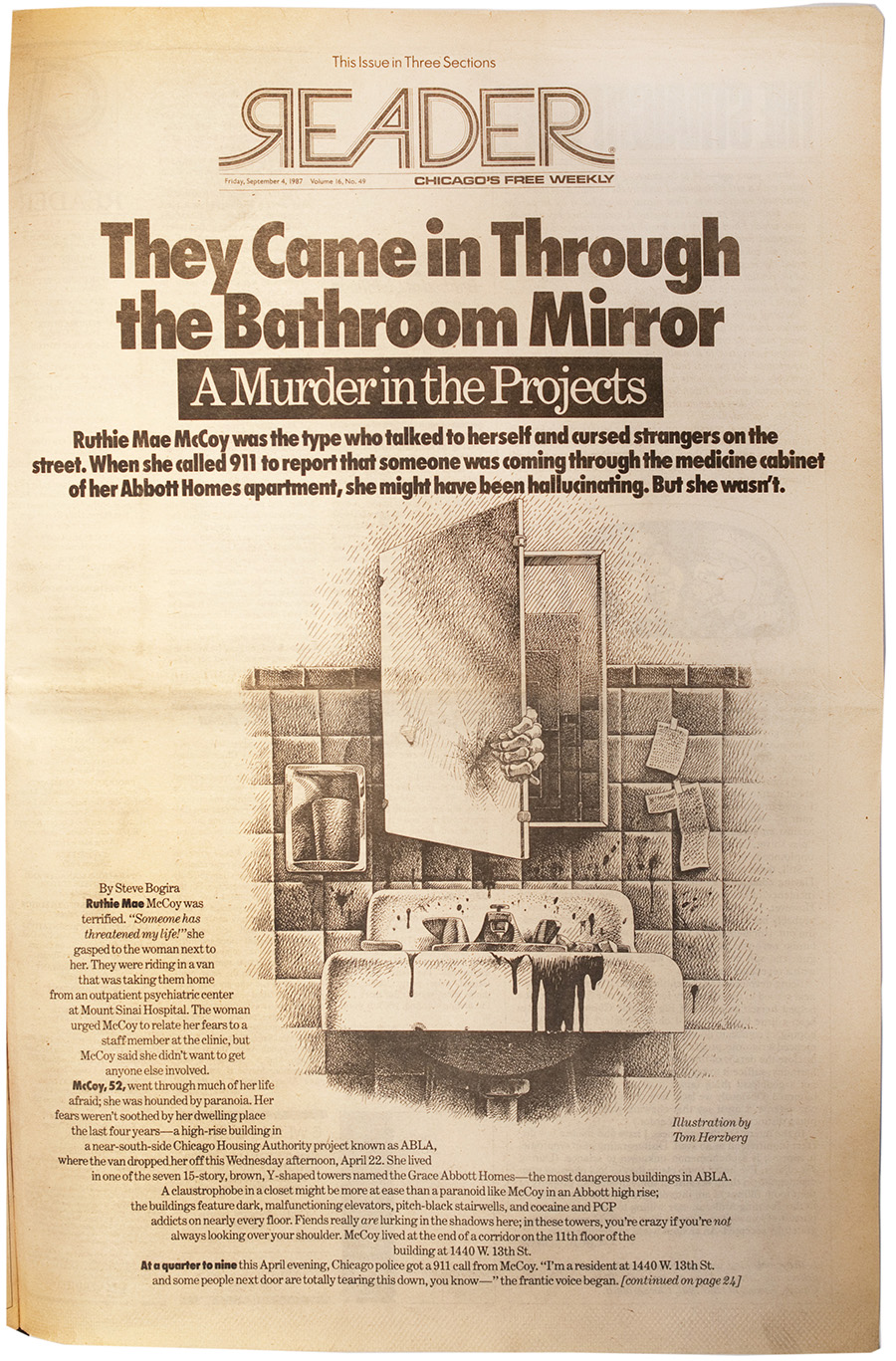
Bloody Mary is a legend of a ghost, phantom, witch, or spirit conjured to reveal the future. She is said to appear in a mirror when her name is chanted repeatedly. The Bloody Mary apparition may be benevolent or malevolent, depending on historical variations of the legend. Bloody Mary appearances are mostly witnessed in group participation play.
Historically, the divination ritual encouraged young women to walk up a flight of stairs backward holding a candle and a hand mirror, in a darkened house. As they gazed into the mirror, they were supposed to glimpse a view of their future husband's face.
In the ritual of today, Bloody Mary allegedly appears to individuals or groups who ritualistically invoke her name in an act of catoptromancy. This is done by repeatedly chanting her name into a mirror placed in a dim or candle-lit room. More modern versions of the ritual are played in a restroom. The name must be uttered 3 times (or some other specified number of times).
Which some think it sparked the idea of a film called Candyman. The film was filmed in Chicago. It was filmed at one of Chicago’s iconic buildings called Cabrini - Green.
Cabrini Green one of the Chicago Housing Authority’s sites was home of the tv show Good Times, Chicago Code and sometimes seen in Chicago Fire and Pd. The Frances Cabrini Rowhouses and Extensions were south of Division Street, bordered by Larrabee Street to the west, Orleans Street to the east and Chicago Avenue to the south, with the William Green Homes to the northwest.
Construction began in 1942 with the first being the row houses. 1957 was the Cabrini Annex also known as the red buildings. In 1962 William Green Homes were built and at the start of 1995 till 2011 they were demolished leaving only the row houses.
Although Candyman is based on the book by Clive Baker called THE FORBIDDEN. Barker's story revolved around the themes of the British class system in contemporary Liverpool, Rose chose to refit the story to Cabrini-Green's public housing development in Chicago and instead focus on the themes of race and social class in the inner-city United States.
Helen Lyle is an anthropologygraduate student at the University of Illinois Chicago. While researching urban legends, she familiarizes herself with Candyman, a spirit who kills anyone that speaks his name five times before a mirror. She learns of a recent murder at the Cabrini–Green Homespublic housing project and several others that have been attributed by locals to Candyman. Skeptical, Helen and her friend Bernadette Walsh repeat Candyman's name to Helen's bathroom mirror, to no avail.
Helen and Bernadette work together on a thesis on how Cabrini-Green residents use the Candyman legend to cope with racial inequality. She and Bernadette visit the scene of the most recent murder. There, Helen discovers a room where sweets have been left for Candyman.
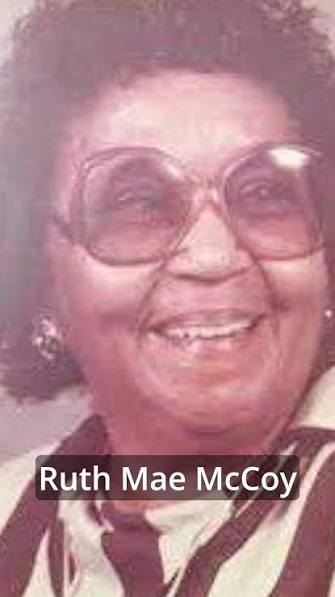
In April 1987, 52-year-old Ruthie Mae McCoy called police to report that someone was trying to enter her 11th-floor apartment “through the bathroom cabinet.” When officers finally arrived, it was already too late to save her. Investigators in her case discovered an opening in the shared wall space behind the cabinet that allowed intruders to climb between units, a serious design flaw that turned an ordinary fixture into an access point.
When director Bernard Rose began researching Candyman in the early 1990s, he came across an article detailing McCoy’s case. The idea that someone could come through the mirror instead of just appearing in it apparently stuck with him. Ross reimagined it through his own lens in Candyman, with the title character appearing when called upon by repeating his name five times through the mirror. That eerie little detail wasn’t just fiction. It was borrowed straight from the real headlines.
Ruthie Mae McCoy lived in Abla Homes Chicago Housing Authority’s first public housing development. The name "ABLA" was an acronym for the names of the four different housing developments that together constituted one large site: Addams, Brooks (including the Robert Brooks Extension), Loomis, and Abbott, totaling 3,596 units. It spanned from Cabrini Street on the north end to 15th Street on the south end, and from Blue Island Avenue on the east end to Ashland Avenueon the west end. Most of the ABLA Homes have been demolished for the development of Roosevelt Square, a new mixed-income community by The Related Companies, with the renovated Brooks Homes being the only part left.
McCoy, 52, went through much of her life afraid; she was hounded by paranoia. Her fears weren’t soothed by her dwelling place the last four years—a high-rise building in a near-south-side Chicago Housing Authority project known as ABLA, where the van dropped her off this Wednesday afternoon, April 22. She lived in one of the seven 15-story, brown, Y-shaped towers named the Grace Abbott Homes—the most dangerous buildings in ABLA. A claustrophobe in a closet might be more at ease than a paranoid like McCoy in an Abbott high rise; the buildings feature dark, malfunctioning elevators, pitch-black stairwells, and cocaine and PCP addicts on nearly every floor. Fiends really are lurking in the shadows here; in these towers, you’re crazy if you’re not always looking over your shoulder. McCoy lived at the end of a corridor on the 11th floor of the building at 1440 W. 13th St. Apt. 1109.
Four officers apparently arrived at McCoy’s door around ten minutes after nine. They pounded on the door, announced their presence, called for McCoy. No answer. They asked the dispatcher to call McCoy on her phone. “We think somebody may be in there holding somebody,” an officer told the dispatcher over the radio. The officers listened to the phone ring and ring.
There were two more officers downstairs, and they drove over to the project office, a block away on Loomis, to get the key to 1109. But the key didn’t fit McCoy’s lock.
This left the officers wondering what to do—should they break into the apartment? Talking with neighbors didn’t help much: nobody answered across the hall, the apartment next door was vacant, and the neighbors in the apartment down the hall said no, they hadn’t heard or seen a thing. Other neighbors on the floor said an elderly woman lived in 1109. “They say that she always answers her door,” one of the officers told the dispatcher in a hesitant voice. “And there’s no answer … so—I don’t know if maybe she answered to the wrong person or what.”
The officers contacted the project office again, but the janitor there said he had no other key for 1109. And so, at 9:48 PM, the police left McCoy’s building and the project.
The following evening, police got a call from Debra Lasley, an 11th-floor neighbor of McCoy’s. Lasley said McCoy normally stopped by her apartment on her way out of the building every morning and upon her return in the afternoon. But this day, she hadn’t stopped by at all. Lasley had seen police at McCoy’s door the night before, and was worried.


Comments
Post a Comment